Is 20% APR on a Car Loan Too High? What to Do Now

A 20% APR car loan is very high for most U.S. buyers and, in most cases, avoidable. The national average APR for used cars across all credit tiers is generally lower, and even many borrowers in the subprime range often qualify for rates below 20% through credit unions or direct lenders. If a dealer just handed you a contract showing 20% APR auto financing, do not sign it yet.
Your immediate priorities: pause, ask for a written breakdown of the APR, the lender’s name, and every fee rolled into the loan. Then get pre-qualified with a credit union or an online lender before you go back to the table. Running a benchmark report through Baywall takes a few minutes and shows you the target rate buyers with your credit profile actually pay, plus the dollar savings you could demand.
Table of Contents
- What a 20% APR car loan actually costs you
- Where 20% sits relative to average U.S. auto loan rates
- Why lenders charge around 20% APR
- Concrete options to fix or avoid a 20% APR
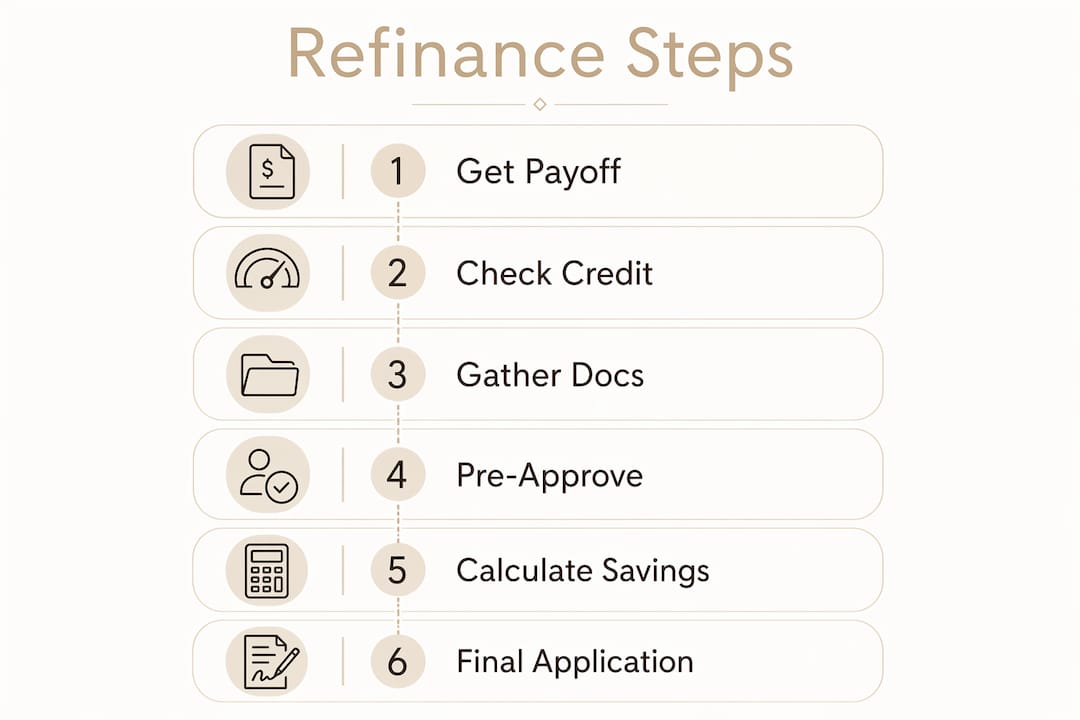
- How to refinance a 20% loan: a step-by-step checklist
- How Baywall’s report helps you benchmark a dealer’s offer
- Questions to ask the dealer and red flags to watch for
- Key Takeaways
- The real cost of not questioning a high rate
- Check your dealer’s APR before you sign
- Authoritative sources and further reading
What a 20% APR car loan actually costs you
The fastest way to feel the weight of a high rate is to see it in dollars.

Example 1: $15,000 used car, 60-month term
At a very high APR, monthly payment can be significantly higher. Over five years the total paid can exceed the loan amount substantially due to interest. Lowering the APR considerably reduces total interest, saving thousands that could instead fund other expenses.
Example 2: $10,000 used car, 48-month term
At a very high APR, monthly payments and total interest charges can be substantially elevated. Reducing the APR significantly lowers total interest costs, yielding meaningful savings on a typical used-car loan.
| Loan Amount | Term | APR | Monthly Payment | Total Interest |
|---|---|---|---|---|
| $15,000 | 60 months | 20% | — | — |
| $15,000 | 60 months | 10% | — | — |
| $10,000 | 48 months | 20% | — | — |
| $10,000 | 48 months | 10% | — | — |
Monthly payments and interest totals are calculated using standard amortization at the stated APR.
The real risk: At 20% APR, the total interest paid can exceed the car’s resale value within a few years, leaving you in a position where selling the vehicle does not fully cover the payoff balance.
Where 20% sits relative to average U.S. auto loan rates
Experian’s credit-tier data and NerdWallet’s rate breakdowns both show that 20% APR sits at or above the top of the subprime range for most lenders. Here is how the tiers typically stack up for used-car loans:

Credit tiers are generally associated with progressively higher APR ranges from super-prime to deep subprime. Higher credit risk borrowers in lower credit tiers typically face higher APRs, with the highest risk tiers paying substantially more than prime borrowers.
A 20% APR is consistent with deep-subprime pricing. For context, some lenders serving poor-credit borrowers list APRs as high as 29.99% for the riskiest profiles, so 20% is not the absolute ceiling. But it is still roughly two to three times what a prime borrower pays.
- Dealer-arranged financing often carries a markup above the lender’s base rate, sometimes 1–3 percentage points, which the dealer keeps as profit.
- Used vehicles carry higher rates than new cars because they depreciate faster and represent more collateral risk for the lender.
- Direct lenders, credit unions, and online banks typically offer lower rates than dealer finance offices for the same credit profile.
Pro Tip: Credit unions are member-owned and not profit-driven, so their auto loan rates frequently beat dealer-arranged financing by several percentage points, even for borrowers with imperfect credit.
Why lenders charge around 20% APR
Several factors push a rate into the 20% range, and understanding which ones apply to your situation tells you which levers you can pull.
“A 20-year-old with a thin credit file, a short employment history, and a high loan-to-value ratio on an older used car is exactly the borrower profile that lands in the 20% APR zone. The rate is not random — it reflects every risk factor the lender can see.” This scenario, reported by Yahoo Finance, is one of the most common paths into a high-rate loan.
The main drivers:
- Low FICO score. Scores below 600 push borrowers into subprime and deep subprime pricing tiers automatically.
- Thin credit history. Young buyers with fewer than two years of credit history often get treated as higher risk even with no negative marks.
- High debt-to-income ratio. Lenders want to see that your monthly debt payments stay well below your gross income. A tight DTI signals repayment risk.
- Older or high-mileage vehicle. A car more than seven years old or with over 100,000 miles is harder to repossess and resell, so lenders price that risk into the rate.
- High loan-to-value ratio. Financing more than the car is worth gives the lender less cushion if you default.
- Buy-here-pay-here dealers. These lots often act as both seller and lender, with no external rate competition, and routinely charge rates at or above 20%.
- Dealer markup. The dealer’s finance office can mark up the lender’s base rate and pocket the difference, a practice called “dealer reserve.”
Pro Tip: Before you visit any dealership, get pre-approved through a credit union or online lender. That approval letter is your rate ceiling in the finance office. The dealer can try to beat it, but they cannot ignore it.
Concrete options to fix or avoid a 20% APR
Here is a ranked playbook, from the most immediate action to the last resort.
- Do not sign. Walking away is always an option. A dealer who insists the rate cannot change is either wrong or not the right dealer for you.
- Get pre-qualified elsewhere. Soft-pull pre-qualification with multiple lenders shows you realistic APRs without touching your credit score. Bring the best offer to the dealer as leverage.
- Negotiate the APR directly. Ask the finance manager to show you the lender’s buy rate (the rate the lender actually charges) versus what you are being quoted. The gap is the dealer’s markup, and it is negotiable.
- Apply to a credit union or online bank. These lenders frequently offer lower rates than dealer-arranged financing for the same credit profile, especially for borrowers in the near-prime and subprime tiers.
- Add a co-signer. A co-signer with a strong credit score can pull your effective rate down significantly, sometimes by five percentage points or more.
- Increase your down payment. A larger down payment reduces the loan-to-value ratio, which lowers lender risk and can qualify you for a better rate tier.
- Shorten the loan term. Lenders often offer lower rates on 36-month loans than on 72-month loans because shorter terms reduce default exposure.
- If you are already stuck, refinance as soon as possible. Six to twelve months of on-time payments can improve your credit score enough to qualify for a meaningfully lower rate. The subprime auto market is under stress, which means lenders are watching payment behavior closely — consistent on-time payments are your fastest path to a better rate.
- Consider selling or returning the car. If the loan is genuinely unaffordable, selling the vehicle and paying off the balance stops the interest drain. Returning the car to the dealer (voluntary repossession) is a last resort that damages credit, but it is better than a default.
If you believe a lender or dealer used deceptive practices to place you in a high-rate loan, you can file a complaint with the Consumer Financial Protection Bureau (CFPB) at consumerfinance.gov or with your state attorney general’s office.
How to refinance a 20% loan: a step-by-step checklist
Refinancing is the most practical exit for borrowers already locked into a high-rate loan. Here is how to do it efficiently.
Step 1: Get your payoff amount. Call your current lender and ask for the exact payoff balance and the title status. You need to know whether you have positive or negative equity.
Step 2: Pull your credit report. Check all three bureaus at AnnualCreditReport.com. Dispute any errors before applying, since even a small score improvement can move you to a better rate tier.
Step 3: Gather your documents. You will need recent pay stubs, a government-issued ID, proof of insurance, and your current loan account number.
Step 4: Get pre-approvals using soft pulls. Apply to at least three lenders, including a credit union and an online lender, before any hard-pull application. This lets you compare offers without credit score damage.
Step 5: Calculate whether refinancing saves money. Factor in any title transfer fees (typically $25–$75 depending on your state) and confirm your current loan has no prepayment penalty.
Step 6: Complete the hard-pull application with your chosen lender. Once you have the best offer in hand, finalize the application. The new lender pays off your old loan and issues a new one.
Typical timeline: Pre-approvals often come back within one business day. Full refinance funding usually takes 3–7 business days after the hard-pull application.
| Scenario | Original Loan | Refinanced Loan | Monthly Savings | Total Interest Saved |
|---|---|---|---|---|
| $15,000 / 48 months remaining | 20% APR | 12% APR | ~$60/month | — |
| $15,000 / 48 months remaining | 20% APR | 10% APR | — | — |
After 6–12 months of on-time payments, many near-prime borrowers can qualify for rates in the 10%–14% range through a credit union or direct lender. Deep-subprime borrowers may still see rates of 15%–18% on a first refinance, but that is still a meaningful improvement over 20%.
How Baywall’s report helps you benchmark a dealer’s offer
Knowing that 20% is high is one thing. Knowing the exact rate you should be paying, and how much you can save by pushing back, is what actually wins at the negotiating table.
Baywall is a car loan rate intelligence tool built for exactly this situation. You enter your credit score, the vehicle details, the loan amount, the term, and the dealer’s quoted APR. Baywall compares that offer against real transaction data from comparable deals, same credit tier, same loan type, similar vehicle, and returns a clear verdict: great, fair, or high.
The report outputs:
- A target APR — the rate buyers with your profile actually paid in comparable transactions
- Dollar savings — the difference in total interest between the dealer’s rate and the target rate
- Comparable vehicle pricing — market data on what similar cars are selling for, so you can negotiate the purchase price too
Illustrative example: A buyer with a near-prime credit score financing a $14,000 used car over 60 months at a dealer-quoted 20% APR might see a Baywall target rate of 13%, with a total savings estimate of roughly $3,500 over the life of the loan. That number gives the buyer a specific figure to put on the table.
Baywall offers a free basic check and a one-time paid detailed report. The paid report costs $2.99. Measured against thousands of dollars in potential interest savings, that is a straightforward trade.
Pro Tip: Run the Baywall report before you go back to the dealer. Walking in with a printed target APR and a dollar-savings figure is a very different conversation than walking in and saying the rate “seems high.”
Questions to ask the dealer and red flags to watch for
Before you sign any finance contract, ask these questions in writing:
- What is the exact APR, and how is it calculated?
- Who is the lender, and is this loan being sold or retained?
- What is the dealer’s buy rate from the lender, and what is the markup?
- Are there prepayment penalties?
- What fees are rolled into the monthly payment (GAP insurance, extended warranty, credit insurance)?
“The single most common predatory tactic in dealer financing is inflating the monthly payment with add-on products — GAP insurance, paint protection, extended warranties — while keeping the buyer focused on whether they can afford the monthly number. By the time the buyer reads the contract, thousands of dollars in extras are already baked in.” This pattern is well-documented in consumer finance reporting and CFPB complaint data.
Red flags that should make you pause or walk away:
- The APR field is blank when you are asked to sign (“we’ll fill that in later”).
- The dealer quotes only a monthly payment and deflects every question about the total loan cost.
- The payment increases after a short promotional period.
- You are pressured to sign the same day with no time to review.
- “Yo-yo financing” — you drive the car home, then the dealer calls days later saying the financing fell through and you need to sign a new contract at a higher rate.
Pro Tip: Take a photo of every document before you leave the dealership. If you later need to file a complaint with the CFPB or your state attorney general, documentation of the original terms is your strongest evidence.
If you suspect predatory financing, file a complaint at consumerfinance.gov/complaint or contact your state attorney general’s consumer protection division. Document everything: dates, names, and the exact figures you were quoted at each stage.
Key Takeaways
A 20% APR car loan costs the average U.S. buyer thousands of dollars more in interest than a market-rate loan, and most borrowers have at least one realistic path to a lower rate before or after signing.
| Point | Details |
|---|---|
| 20% APR is very high | It sits at the top of the subprime range; most borrowers can qualify for lower rates through a credit union or direct lender. |
| The dollar cost is significant | On a $15,000 loan over 60 months, 20% APR costs thousands more in interest than a typical market-rate loan; buyers can save a substantial amount by qualifying for a lower rate. |
| Refinancing is a real exit | After 6–12 months of on-time payments, many borrowers can refinance to 10%–14% and save thousands. |
| Dealer markups add to the rate | The finance office can mark up the lender’s base rate; asking for the buy rate and negotiating it down is legitimate. |
| Baywall benchmarks your offer | Enter your credit tier, vehicle, and loan details at Baywall to get a target APR and dollar savings figure before you negotiate. |
The real cost of not questioning a high rate
Most young buyers who end up in a 20% APR loan did not make a reckless decision. They needed a car, the dealer made the process feel fast and normal, and no one handed them a comparison. That is the gap worth closing.
The conventional wisdom says “build your credit first, then buy.” That advice is fine in theory and useless when you need transportation for a job starting Monday. The more practical truth: you can buy a car with imperfect credit and still avoid the worst rates, but only if you slow down the process long enough to get a competing offer. One pre-approval from a credit union, or one Baywall report showing your target APR, changes the entire dynamic in the finance office. Dealers know most buyers do not have that number. When you do, the conversation shifts.
For young buyers specifically: a co-signer is not a sign of failure. It is a tool. Use it for the first loan, make every payment on time, and refinance in 12 months when your score reflects that history. The rate you sign today is not permanent.
Check your dealer’s APR before you sign
You just read the math. A 20% APR on a typical used-car loan can cost you $4,000–$8,000 more in interest than a market-rate loan on the same vehicle. Baywall was built so you do not have to guess whether your dealer’s number is fair.
Enter your credit score, vehicle, loan amount, and term at Baywall’s analyze page, and the report benchmarks your dealer’s quoted APR against real transaction data from comparable deals. You get a clear verdict (great, fair, or high), a specific target APR to negotiate toward, and the dollar savings you could put back in your pocket. The one-time report costs $2.99. The negotiating leverage it gives you is worth considerably more.
Run your rate check at Baywall and walk into the finance office knowing exactly what you should be paying.
Authoritative sources and further reading
| Source | What It Covers |
|---|---|
| Experian — Average Car Loan Rates by Credit Score | APR averages by credit tier for new and used vehicles; the primary benchmark for comparing any dealer quote |
| NerdWallet — Average Auto Loan Rates by Credit Score | Consumer-friendly rate breakdowns by FICO range; useful for understanding where your score places you |
| CNBC Select — Best Car Loans for Bad Credit | Curated lender list for subprime borrowers with APR ranges; shows realistic rate ceilings for poor-credit profiles |
| Yahoo Finance — 20% APR at Age 20 | Real-world case narrative and community-sourced remedies for a high-rate loan |
| CarSavr — New Car Loans | Guidance on soft-pull pre-qualification and comparing lenders to find lower APRs |
| PenFed — Auto Loan Rates | Example direct-lender rates for well-qualified borrowers; useful baseline for what excellent-credit buyers pay |
| Baywall — Rate Benchmarking Tool | One-time paid report that benchmarks your dealer’s APR against comparable transactions and outputs a target rate and savings estimate |